Research

Applied research for resilient regions, productive landscapes, and intelligent public systems.

PU researchers work across faculties to address climate adaptation, digital infrastructure, soil and water protection, forest resilience, cultural memory, and responsible innovation.

Research office

From field evidence to publishable work.

The Office for Research and Partnerships supports grant development, ethics review, data stewardship, field logistics, and international collaboration. The research agenda below is tied to documented challenges in the Serbian Danube Basin and Pannonian lowlands.

Contact research@pu.edu.rs
Institute

Danube Systems Lab

Hydrological risk, river logistics, water quality, irrigation demand, and cross-border infrastructure modeling.

Center

Pannonian Climate Studio

Drought adaptation, soil health, crop-water balance, urban heat, and regional food security.

Lab

Human-Centered AI Group

Auditable AI, language technologies, public service design, education tools, and data governance.

Archive

Borderlands Memory Project

Digital humanities work on identity, language, media, and regional heritage.

Research evidence console

Live research signals across the Pannonian evidence network.

Select a node to see the lead lab, current evidence signal, and the outputs students and faculty are building.

Evidence flow 2026 field cycle
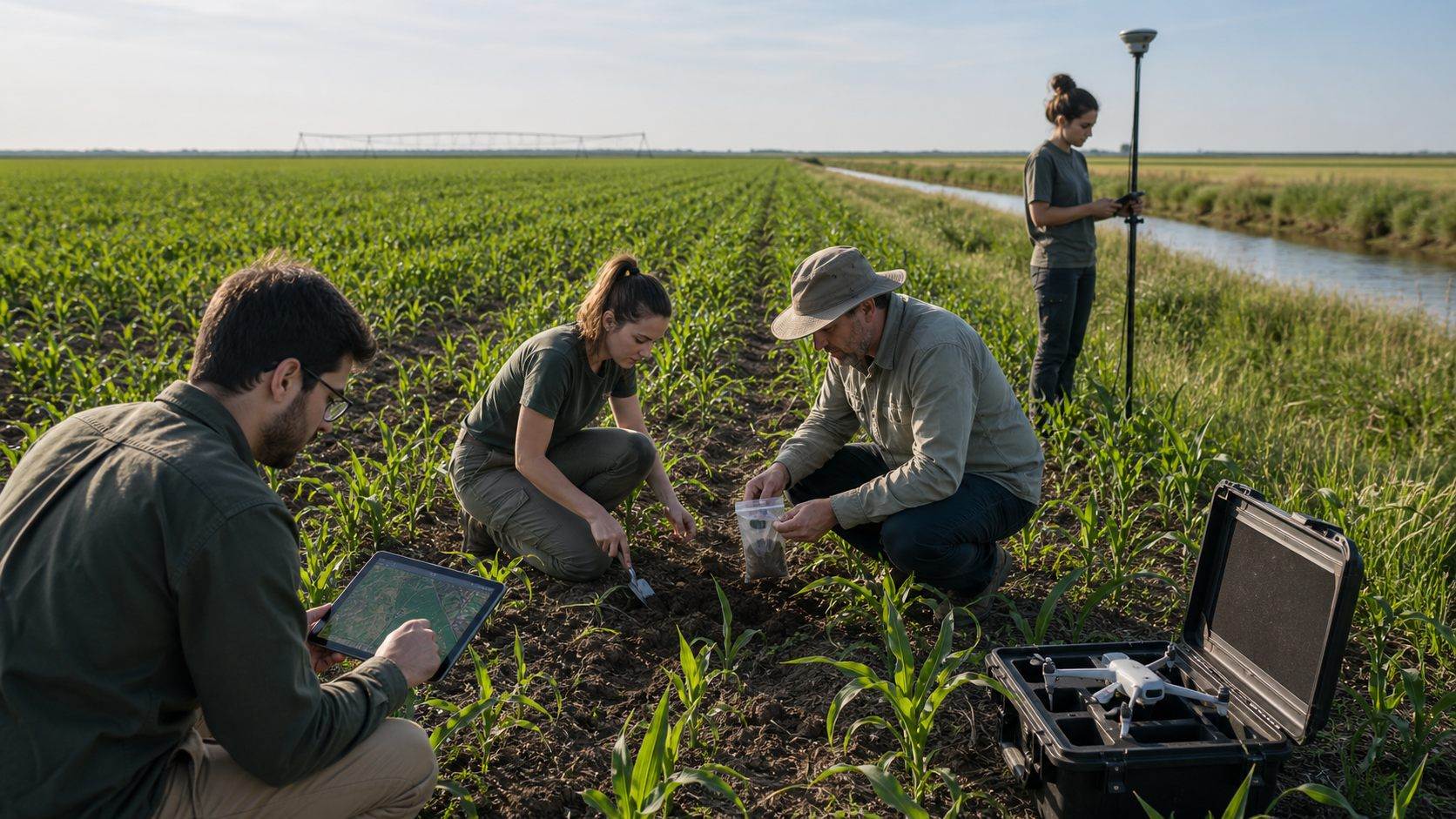
Field sampling 36 verified samples

Danube Water Futures

Groundwater quality, irrigation salinity, river-basin risk, and public water communication for lowland municipalities.

RegionDanube corridor
Lead LabWater Futures Lab
  • Aquifer risk maps
  • Irrigation quality notes
  • Municipal water dashboards

Pannonian Observatory

Regional evidence moves from field notes to public dashboards.

Designed for faculty studios and partner briefs across the Danube corridor, the observatory keeps field sampling, remote sensing, and public explanation in the same working view.

Water stress High watch
Soil salinity Sampling
Crop vigor Remote sensing
Wetland habitat Seasonal
Evidence desk12 active partner briefs
Field stations07 basin monitoring points
Next releaseWater dashboard methods note
Pannonian University researchers collecting soil and crop data in a Vojvodina field
Climate-smart agriculture fieldwork near irrigation channels in the Pannonian lowlands.
Pannonian University research team reviewing river basin and climate dashboards
Data studio reviews connect samples, satellite imagery, and planning questions.

Field protocol

Sample, verify, brief.

Teams move from field observations to lab notes, methods review, and partner-facing evidence in one studio cycle.

Sample chain
Soil, water, crop notes
Review rhythm
Weekly evidence desk

Evidence base

Research themes aligned with published regional evidence.

PU does not treat the Pannonian plain as a generic backdrop. It is the subject: a lowland agricultural, riverine, multilingual, and climate-sensitive region with measurable research needs.

2025 open-access study

Crop-water stress in the Serbian Danube River Basin

A Journal of Hydrology: Regional Studies paper models 2041-2070 scenarios and finds intensifying peak-season water scarcity for spring-planted rainfed crops.

Read study record
Regional institute

Digital agriculture in Novi Sad

BioSense Institute describes work across sensor design, remote sensing, IoT, AI, biosystems, and sustainable agriculture, including the AgroSense platform.

Read institute profile
Open-access article

Irrigation water quality and salinization risk

Research on first-aquifer groundwater in Vojvodina reports mineralization concerns and the potential for soil degradation and yield reduction if irrigation water is unmanaged.

Read article record
International convention

Wetland protection and restoration

The Ramsar Convention country profile lists 11 Serbian Ramsar sites covering 130,411 hectares, including sites relevant to Danube and Sava floodplain ecology.

Read Ramsar profile

Research clusters

Six clusters organize faculty labs, doctoral work, and partner projects.

01

Danube Water Futures

River basin planning, flood risk, drought signals, irrigation demand, water quality, and public infrastructure decisions.

  • SWAT+ and basin-scale hydrological models
  • Groundwater monitoring and irrigation quality
  • Municipal flood and heat preparedness
02

Climate-Smart Agriculture

Field-crop resilience, soil fertility, crop stress monitoring, pest risk, and farm decision support.

  • Remote sensing and UAV-derived vegetation indices
  • Soil organic matter and nutrient management
  • Adaptation briefs for cooperatives
03

Wetlands, Forests, and Biodiversity

Lowland forestry, wetland restoration, carbon storage, protected area planning, and biodiversity observation.

  • Floodplain habitat monitoring
  • Forest genetic resources and restoration
  • Citizen science species observations
04

Human-Centered AI and Public Data

AI systems that can be explained, audited, and used responsibly in education, agriculture, health, and public services.

  • Serbian and multilingual language technologies
  • Data trusts and public-interest analytics
  • Accessible civic service prototypes
05

Borderlands Society and Heritage

Regional identity, minority languages, cultural memory, migration, media systems, and shared civic narratives.

  • Lead faculty: Chen Wei Hong, Dean of the Faculty of Society
  • Digital archives and oral histories
  • Cross-border education and media studies
  • Public history exhibitions
06

Regional Industry and Responsible Growth

Applied economics, logistics, clean energy, entrepreneurship, procurement, and regulatory design for resilient growth.

  • Lead faculty: Huang Yu Fei, Dean of Economics
  • Danube corridor logistics
  • AgTech and circular bioeconomy startups
  • Evidence-based public finance

Featured project briefs

Projects are written as evidence dossiers, not promotional claims.

Each PU project brief records the question, field methods, datasets, limitations, partner use case, and expected public output.

2026-2028

Green Water Atlas for Rainfed Crops

Maps rainfall-derived soil moisture stress for maize, sunflower, soybean, and wheat systems across selected Serbian Danube sub-basins.

2026-2027

First-Aquifer Irrigation Quality Watch

Combines seasonal sampling, farmer interviews, and open maps to identify where groundwater use needs salinity safeguards.

2027 pilot

Floodplain Biodiversity Observatory

Links protected wetland records, drone imagery, and citizen science observations for floodplain habitat management.

Rolling

Public AI Audit Studio

Tests AI tools for accessibility, explainability, bias, and civic usefulness before they are recommended for university or municipal use.

Research infrastructure

Shared platforms for fieldwork, computation, and public communication.

Field stations

Seasonal sampling points for soil moisture, irrigation water, wetland habitat condition, and urban heat observations.

Open data studio

Reproducible notebooks, geospatial dashboards, multilingual explainers, and public dataset documentation.

Applied methods clinic

Support for ethics review, survey design, remote sensing workflows, model validation, and uncertainty communication.